Skip to content
What is the VariZapper and how does it work?
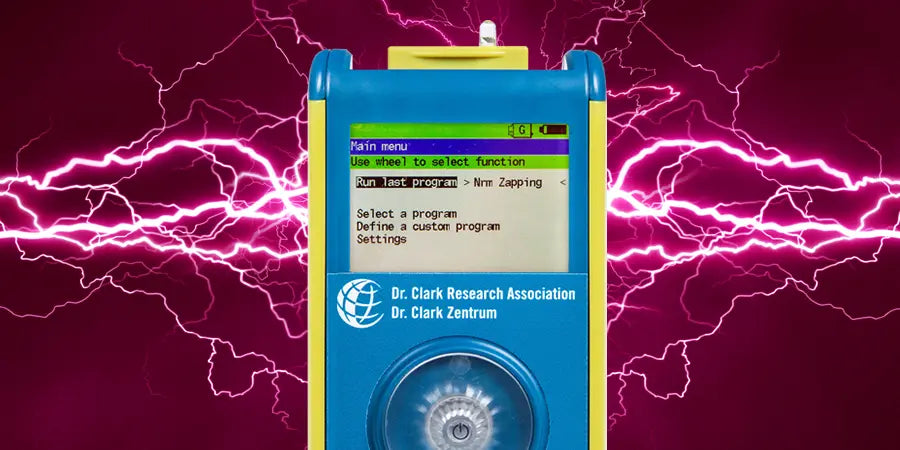
The VariZapper is a low-voltage electrical biostimulation device, known in the field of biofrequency as a zapper, designed based on the principles developed by Hulda Clark. It is used as a complementary tool within wellness protocols focused on internal hygiene, detoxification, and the bioelectrical balance of the body.
Unlike more complex systems, the VariZapper combines regular zapping (frequency-independent) with specific-frequency zapping through the use of Program Driver cards, expanding its potential applications within integrative approaches.
What is a Zapper?
A zapper is a device that emits a pulsed electrical current at very low voltage, typically generated by a battery and applied to the body through electrodes. According to Dr. Clark’s theory, this type of electrical signal may affect microorganisms sensitive to electrical fields, without causing tissue damage due to the low intensity used.
A zapper operates with:
- Square wave
- Positive offset (the signal never crosses into negative voltage)
- Low voltages (approximately 5–10 V)
These characteristics differentiate it from conventional electrostimulation devices.

How does the VariZapper work?
The VariZapper generates a square wave with positive offset, meaning the current alternates between positive voltage and zero. This signal shape produces multiple harmonics, allowing a frequency-independent effect during regular zapping.
Its operation is divided into two main modes:
1. Regular Zapping (Frequency-Independent)
In this mode, the VariZapper uses a standard frequency (around 30 kHz), following Dr. Clark’s proposal that a fully positive signal can act on multiple microorganisms without the need to match specific frequencies.
This mode serves as the general foundation of most protocols.
2. Frequency Zapping (Program Drivers)
The VariZapper 2.0 allows the insertion of Program Driver cards, which contain lists of frequencies associated with different imbalances. This approach relates to concepts of bioresonance and frequency-based therapy and is used as a complement to regular zapping.
After using specific frequencies, it is recommended to return to regular zapping as a phase of “general cleansing.”
How is the VariZapper different from Rife Technology?
Although both systems are often mentioned within the biofrequency field, they are not the same:
- The VariZapper primarily works with pulsed current, square wave, and positive offset.
- Rife devices typically use specific sinusoidal frequencies, often modulated or carrier-based, and are generally more complex.
In practical terms, the VariZapper is a simpler, portable system intended for home use within non-medical wellness protocols.

Use and Safety Considerations
The VariZapper:
- Is not a medical device.
- Does not diagnose or treat diseases.
- Does not replace professional medical care.
Historically, it is recommended not to use it during pregnancy or in individuals with pacemakers, and always to use it as a complementary tool within an integrative wellness approach.
Frequently Asked Questions about the VariZapper
Is the VariZapper a medical device?
No. In the United States, the VariZapper is classified as a wellness and complementary-use device and is not approved as a medical treatment. It is commonly used as a supportive bioelectrical tool within integrative wellness protocols, based on biofrequency principles originally developed by Dr. Hulda Clark.
Can it be used every day?
According to Dr. Clark’s historical protocols, use may be regular, adjusting duration and intensity to the individual.
What is the difference between regular zapping and frequency zapping?
Regular zapping is frequency-independent; frequency zapping uses specific lists via Program Driver cards.
Does the VariZapper replace medical treatments?
No. Its use is complementary and educational.
Bibliography and References
- Clark, H. The Cure for All Diseases. New Century Press.
- Clark, H. Syncrometer Science Laboratory Manual.
- Singh, N. P., & Lai, H. Low-intensity electric current effects on human cells. University of Washington.
- Thiel, R. J., PhD, ND. Bioelectrical stimulation and chronic infection patterns. ANMA Monitor, 1998.
- Kirson et al. Disruption of cancer cell replication by alternating electric fields. PNAS.
- Barbault et al. Tumor-specific frequencies in cancer therapy. PubMed ID: 19366446.